On this page
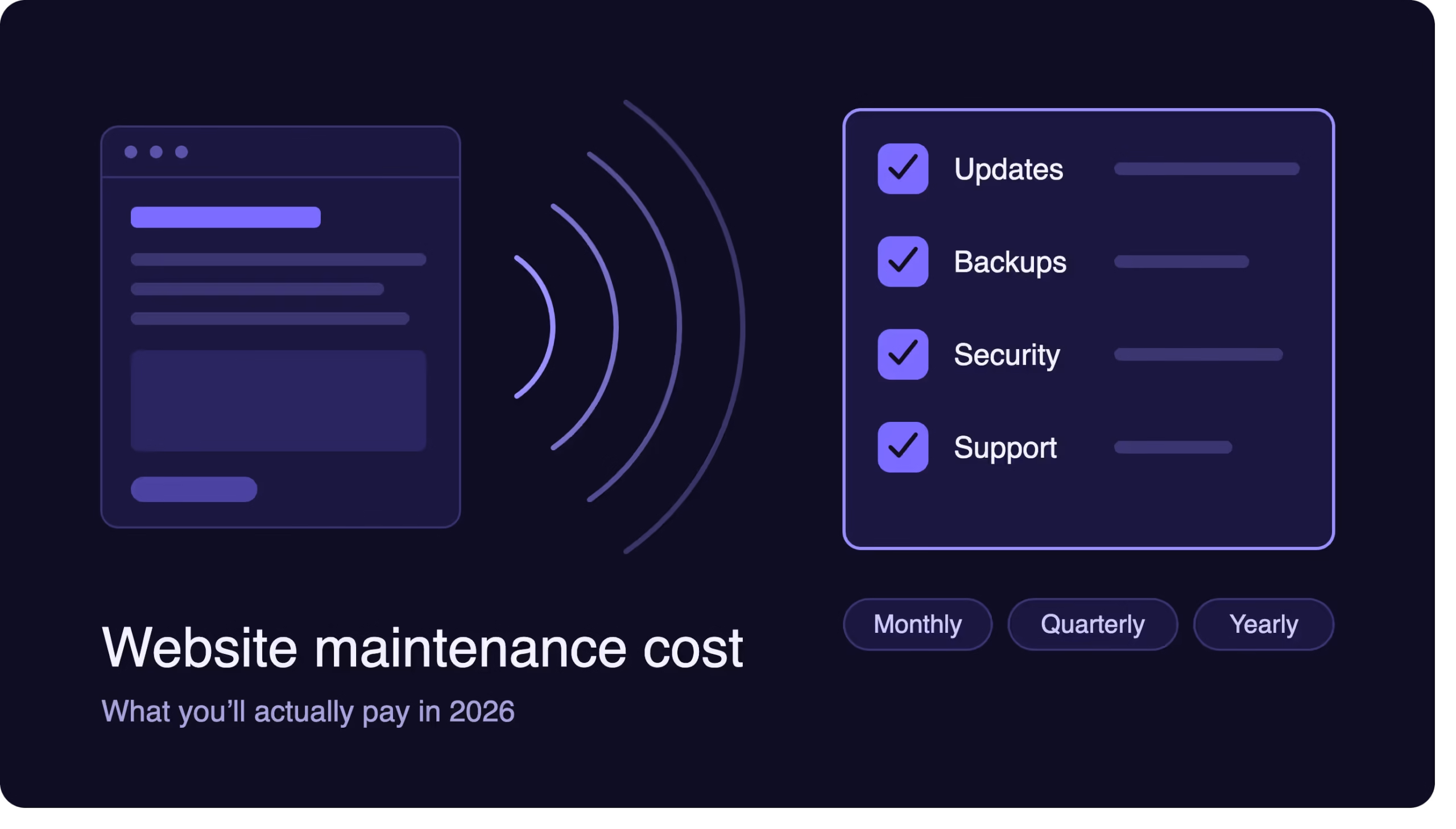
Website maintenance cost is what you pay to keep a site secure, updated and working after launch. Most guides put a small business website at about $50 to $1,000 a month, and the gap comes from what the price includes.
That gap is the real problem. We compared three popular guides, from a domain registrar, a design agency and a WordPress host. For the same kind of site, their low ends differ by as much as ten times. This guide puts the numbers side by side, explains why they disagree, breaks down what a plan includes, and shows what changes on WordPress, Shopify and a custom Next.js site. We build and support all three.
What is website maintenance?
Website maintenance is the routine work that keeps a live website secure, fast and current. It covers installing updates, running backups, watching uptime, fixing what breaks and making small content changes. It is different from a redesign, which changes how the site looks and works, and from SEO or ads, which bring in visitors.
How much does website maintenance cost?
For most small business websites, expect roughly $50 to $1,000 a month, depending on what the plan covers. Here is what three popular guides say, per month in US dollars.
| Type of site | GoDaddy (April 2026) | Gravitate (January 2026) | Rocket.net (2024 rates) |
|---|---|---|---|
| Personal site or blog | $5 to $75 | $5 to $25 | $100 to $200 |
| Small business site | $50 to $500 | $50 to $250 | $500 to $1,000 |
| Ecommerce store | $300 to $1,000 | $500 to $2,000+ | $750 to $5,000 |
| Large corporate or custom site | $1,000 to $5,000+ | $1,000 to $5,000+ | $1,000 to $4,500 |
Why do website maintenance guides disagree?
The guides price different things. Three reasons explain most of the gap:
- Scope differs. GoDaddy contrasts a website builder at $10 to $30 a month, with hosting, security and updates built in, against a self-hosted site at $50 to $300 or more. A low price usually means hosting and automatic updates. A high price usually adds developer hours and support.
- Each publisher sells something different. A registrar, a design agency and a WordPress host each count different things as maintenance.
- Some numbers are old. Rocket.net says its figures reflect 2024 market rates.
Before you compare quotes, compare what each one covers.
What does the maintenance bill actually include?
A maintenance bill is made of tool costs and labor. The ranges below combine the GoDaddy and Gravitate guides.
| Cost item | Typical range | Billed |
|---|---|---|
| Domain name | $10 to $50 per year | Yearly |
| Hosting | Shared $5 to $25 per month; managed $20 to $300+ per month | Monthly |
| SSL certificate | Free to about $200 per year (many hosts include it) | Yearly |
| Premium plugin or theme licenses | $0 to $500 per year | Yearly |
| Security and backups | Free tools up to $500 per month for managed services | Monthly |
| Developer or support time | $50 to $250 per hour, or a retainer of about $100 to $2,500 per month | Hourly or monthly |
For a small site, tool costs are often well under $100 a month. Labor is what drives the big range.
What does a website maintenance plan include?
A solid plan covers updates, backups, security checks, uptime monitoring and help when something breaks.
| What it usually covers | |
|---|---|
| Included in most plans | Core, plugin, theme or app updates; security patches and scans; regular backups; uptime monitoring; small content edits |
| Often extra | New features and design changes; content writing; SEO work; conversion testing; accessibility reviews; analytics reporting |
| Usually billed separately | Hosting, domain, premium licenses and paid apps; ad spend; payment processing fees |
Most guides suggest doing the basics at least monthly: updates, backups, security scans and an uptime check. A quarterly review of speed, content and SEO fits most sites, with a full audit and renewals once a year. Ask whether backups are tested, not just taken. A backup you can’t restore is not a backup.
How much does maintenance cost on WordPress, Shopify and Next.js?
Your platform decides what there is to maintain.
| Platform | What you maintain | What drives the cost |
|---|---|---|
| Hosted website builder | Very little, since the platform handles hosting, security and updates | A subscription, which GoDaddy puts at $10 to $30 a month for its builder |
| WordPress | Core, plugins, theme, hosting and backups | Hosting, plugin licenses and the labor of updating and testing |
| Shopify | Theme, apps, products and checkout testing; Shopify hosts the store | The plan, app subscriptions and labor for theme and app updates |
| Headless site (WordPress or another CMS plus Next.js) | Two systems: the CMS and the front end | Two hosts, framework upgrades and more developer time |
| Custom app or SaaS | The whole product | About 15% to 20% of the build cost per year, a common rule of thumb |
On WordPress, plugins are the main recurring job. Patchstack counted 11,334 new vulnerabilities in the WordPress ecosystem in 2025, up 42% from the year before, and 91% of new vulnerabilities were found in plugins. That is why plugin updates sit at the top of every maintenance plan. swifpatchstack
We run our own site on a headless setup: WordPress on shared hosting at a private subdomain, and Next.js on Netlify. That means two things to keep updated, the trade-off we describe in our headless WordPress guide. For apps, our app development cost guide covers the yearly maintenance budget in detail.
What isn’t included in the price?
Watch for these costs that don’t appear in a headline monthly fee:
- Emergency rates. Rocket.net lists emergency support at $200 to $350 an hour, against $150 to $250 for standard support.
- Expired licenses. Letting a plugin license lapse can disable features such as forms or shopping carts.
- Third-party fees. Online stores pay payment processing fees, often 2% to 3% or more per transaction, plus app subscriptions.
- Growth. Hosting that fits your traffic today may not fit next year.
- Marketing work. SEO, content and ads are separate from keeping the site running. Our SEO team handles that side.
Should you maintain your website yourself, hire a freelancer or use an agency?
| Option | Strength | Watch for |
|---|---|---|
| Do it yourself | Lowest cost and full control | Falling behind on updates and missing small problems |
| Freelancer | Flexible, usually cheaper than an agency | Limited availability and one person as a single point of failure |
| Agency | Broader skills and structured processes | Higher cost, and check response times in writing |
Hourly rates across the three guides range from about $50 to $250, and agency retainers typically start around $250 a month.
What should you ask before you sign a maintenance plan?
- What exactly is covered, and what costs extra? Get the list in writing.
- How fast will you respond? Ask about emergency rates too.
- Who pays for licenses? Plugins, themes and apps often renew every year.
- Where are backups stored, and do you test restores?
- Do I own the code, designs and accounts? At Echobyte, you own all three once a project is paid for.
- Will I get a report? You should see what was done each month.
- How do I cancel? Check the notice period before you commit.
Every Echobyte project includes 30, 60 or 90 days of post-launch support, depending on the package. Our pricing page has the details.
How can you lower your website maintenance cost?
- Use fewer plugins. Remove any you don’t use. With 91% of WordPress vulnerabilities in plugins, fewer plugins means less to update and less risk.
- Choose managed hosting. Many managed hosts handle updates, backups and security checks for you.
- Build it well the first time. A clean build has fewer bugs to fix later. See our website development service.
- Bundle the work into one plan. A single retainer is usually cheaper than paying for each task separately.
- Do simple edits yourself. Pay for technical work and handle text and photo changes in-house.
- Match the platform to your team. If nobody on your team is technical, a site that needs a developer for every change will cost more over time.
Website maintenance cost FAQ
How much does website maintenance cost per month?
Most small business sites cost about $50 to $1,000 a month to maintain. Personal blogs run from about $5 to $200, online stores from roughly $300 to $5,000, and large custom sites from $1,000 upward, according to GoDaddy, Gravitate and Rocket.net. The price depends mainly on how much developer time and support is included.
What does website maintenance include?
Website maintenance includes software updates, security patches and scans, backups, uptime monitoring and fixing problems when they appear. Many plans also include small content edits. Larger changes such as new features, design work and SEO usually cost extra.
Is website maintenance necessary?
Yes. Software that isn’t updated is a common way sites get hacked. Patchstack found that 91% of new WordPress vulnerabilities were in plugins, which is why regular updates matter. Maintenance also protects speed, uptime and search visibility.
How much does WordPress maintenance cost?
Tool costs such as hosting, a domain and licenses are often well under $100 a month for a small site. Add developer time, roughly $50 to $250 an hour or a retainer from about $100 to $2,500 a month, depending on how hands-on you want support to be.
How often should a website be maintained?
Updates, backups and security checks should happen at least monthly. Reviews of speed, content and SEO fit a quarterly rhythm, and a full audit once a year.
Can I maintain my website myself?
Yes, for simple sites if you’re comfortable with updates, backups and troubleshooting. The main risk is falling behind on updates. If your site brings in leads or sales, professional support is usually the safer choice.
What is the difference between website maintenance and web hosting?
Hosting keeps your site online. Maintenance is the ongoing work on top: updates, security, backups, fixes and support. Some managed hosts bundle part of that work into their plans, so check exactly what is included.
Not sure what level of support your site needs? We build and support WordPress, Shopify and Next.js websites, and every project starts with a free discovery call.
Sources
- How much does it cost to maintain a website in 2026?, GoDaddy, April 2026
- How Much Does Website Maintenance Cost in 2026?, Gravitate, January 2026
- How Much Should You Pay Someone To Maintain Your Website?, Rocket.net, 2024 rates
- State of WordPress Security in 2026, Patchstack